
The identity confusion with rope jumping
A very high profile rope jumping accident in brazil in June 2026 which resulted in a fatality of a young Brazilian woman brought the confusion over what differentiates rope jumping from bungee jumping to the forefront of the public conversation around the world. The media reports identifying the rope swing activity being attempted in the accident as “bungee jumping” were as numerous or more numerous than those that correctly identified the accident to be associated with the rope jumping industry.
Commercial bungee jumping began in the mid-1980s and is today practiced in roughly 60 countries around the world, with close to 200 companies involved directly in operations, design, and manufacturing, and many other entities involved in the supply chain industry.
Rope jumping followed a similar timeline with it’s industries development and the confusion between the 2 activities has been commonplace by the media, consumers and even within the industries themselves from the very beginning.
Many rope jumping accidents have been attributed to “bungee jumping” over the years by the media and sadly very few retractions ever get made for these errors.
The public reaction to the Brazil accident
1- The accident involved a young woman being thrown from a bridge by rope jumping instructors wearing only a harness and no rope at all.
2- The accident went extremely viral and early reports were made with very limited information and many journalist assumed it must be “bungee jumping”.
3- The world media piled on to those early reports rapidly and soon every major publication around the world had told a version of the story.
4- For the first few days the majority of the press simply used the term bungee jumping. Slowly as more information came out, many publications changed to the correct term of “rope jumping”.
5- The world media continued aggressively looking into “bungee jumping safety and oversight” with many bungee jumping companies meeting with the press to give their opinions on both rope and bungee jumping safety.
What are the main differences in the industries
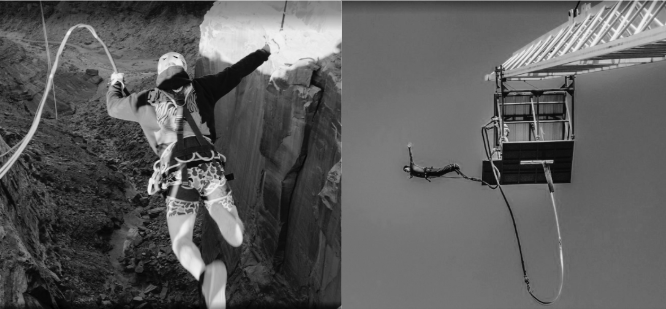
1- Rope jumping typically uses a static or dynamic kernmantle rope rigged in a pendulum (swing) to reduce g-force on the participant. Bungee jumping does not typically use a pendulum effect, jumpers fall vertically with a rubber cord acting as the g-force reducing device and creating a rebound effect instead of a swing.
2- There is no clear prevailing international standard of federation for rope jumping unlike ASTM F-3785 for bungee jumping.
3- The barrier for entry into rope jumping is lower than it is for bungee jumping due to the lack of an international standard as well as ready access to all the required equipment in an “off-the-shelf” fashion, unlike bungee jumping where bungee cords and cord designs are closely controlled and not widely available.
What can the bungee jumping community do?
As of June 2026, the bungee jumping industry will be receiving the world’s attention with specific questions being placed on oversight and safe practice due to the confusion created by the world’s media mislabelling the Brazilian rope jumping accident as “bungee jumping”. Bungee jumping operators can explain the differences to the press and public between the 2 industries using the info on this page.
It is important to welcome the conversation about oversight and safety in the bungee jumping world while the world’s media is interested in it and not steer away from it due to the false headlines. Details about ASTM F-3785 and the IBA can be found on this site or the press can be referred directly to contact the IBA using the link below: